Tuesday, March 27, 2018

Forest Hill Area Fights Back at last night's BMA meeting

A group of Forest Hill Heights citizens voiced their objections at City Hall last night for the third and final reading of the rezoning of the Reaves property, which abuts the new school site. (complete video here, partial linked below). The vote was for the third reading of a zoning change from estate-sized one acre lots to much smaller residential lots. In the executive session of the BMA, it had been decided to defer that vote until the next BMA meeting, due to some legal issues that need further clarification. Several people mentioned to me that former City Attorney Tom Cates was in the audience, and that he was passing notes to various officials. From the Massey in Germantown public Facebook Page--   

I want to send a special thanks to the camera crew for tipping me off to the notes that were passed to the attorney during the BMA meeting last night. And thanks to the City employees who have been cooperating and providing information. Thank you all! More to come...
 
I wonder what that was about! I will try to post something here as soon as I have more complete information about the legal issues. For a sneak peak at the issue you may look at  another part of his Facebook page:


I find it suspicious that the mayor’s administration did not disclose a 2007 covenant that might indicate that the Reaves Schaeffer property cannot be rezoned. Aldermen Gibson, Owens and Janda have boasted about their private meetings and preparation with staff, yet now they want to claim they didn’t know anything about a 30-page legal document that could be unfavorable to the developer’s application to rezone the Reaves Schaeffer property as PUD with 117 lots.

The postponement of the vote obviously did not deter any of the citizens from exercising their right to speak for three minutes each. And did they ever have a lot to say!  A surprising number of them asked for their comments to be written into the official record.  


As per usual, there was a lot of contention throughout the meeting among the aldermen, and most things came down to the now familiar 3-2 vote. I remember thinking that things were pretty far gone when, in previous meetings, there was controversy about the "consent agenda." Well in this meeting, controversy included the content of the minutes of meetings!

The good news is that apparently the City was prepared for a lot of speakers, as I have not heard anything about the City running out of "Citizens to Be Heard" forms as happened in the January meeting.  


Forest Hill Heights-(credit John Peyton)
Our fellow Forest Hill Heights citizens deserve to be heard, and I will try to make it easy for you to listen without wading through the whole meeting.  All apologies to those whose names I misspelled. Please contact me and I promise to make corrections.

Brian Curry.  You Tube Link to Comments 
Taxes in excess of $400,000 paid by folks in area. Some of the highest property values in Germantown. Feels like area under attack, including an elevated water tower. Why water tower, it was not in site plan for school? Why was it not discussed with neighbors? Why not tell us, in an area of one million dollar homes? We know you are following a plan but not all plans are good. Please listen to us. 

Danielle Taylor You Tube Link to Comments  
One third of lots could be less than 15000 square foot lots, if lots were larger would not object, some lots by railroad tracks very tiny, why create more neighborhoods with school children, we need classrooms, not more students, we already have overcrowded schools, mentions watertower, and neighbors not being notified, creeks that are impacted and ignored by City workers, traffic, etc., promises not kept, what if this was your community?

Allen Taylor You Tube Link to Comments  
Moved to get away from apartments in Collierville, wanted children to be close to nature. Lake was drained with no regard for his property, at one point a dead beaver appeared in front of property, slash and burn tactics, few people notified in the area by City, school supposed to relieve overcrowding, but 894 units now planned in area, and more houses, how does this relieve overcrowding, do you know nothing from hasty and greedy actions of Hickory Hill and Cordova, no wonder citizens are filing lawsuits against their own City. 

Kevin Speed  YouTube Link to Comments  
A lot of good things come from BMA, but you get the gist of our attitude, overdevelopment and density, too much, too fast, in the name of Smart Growth, mentions neighborhoods that were ignored: Nottaway, Germantown North, Germantown Heights, The Vinings, Crestwyn, Forest Hill Irene, and all the developments, and broken promises. Mr. Duke got thirteen and a half minutes to talk, Germantown no longer wants Smart Growth. Citizens no longer in dark.

Brandon Wellford YouTube Link to Comments  
Should be one house per acre on Reaves, there is demand for one acre lots, families need options, most of Germantown on smaller lots, maintain the integrity of the area, now a water tower, say no, even the developer against a water tower there, we do not want street lights, like to see stars, rezoning a step towards PUD with 6000 square foot lots.

Jan Kesling YouTube Link to Comments 
Germantown the place to live, tight restrictions, sign ordinances, privacy, estate sized lots, have a dream house in area, lots of wildlife, cherishes trees, now why do people want to destroy Germantown, built lives around estate sized lots, keep character of community, make it more attractive by getting rid of power lines and put underground, school fine but does not require smaller lots.

Lillian Rinker YouTube Link to Comments 
Bought in area due to low density, thought could trust elected officials, now worried for first time that trust may be wrong, supports education and new school, unhappy with rezoning from estate lots ot PUD, don't appreciate lack of transparency, or watertower, which will be an eyesore, as are apartment buildings, elementary school will be outgrown, property values will drop, conflict of interest, developers and real estate will benefit, but wanton disregard for citizens. 

Penelope Pippin YouTube Link to Comments
Led to believe that quiet neighborhoods were zoned with large estate laws, why change quality of life, except for profit of developers, traffic increase, the people are taxpayers.

Ted Pippin YouTube Link to Comments  
City passed regulations to keep people from having to notify people, "bait and switch" many courts say illegal, listen to what you are considering, no cost-benefit analyses, where are they? Only from developer, and his profits, only one heard. 

Ola Adalay YouTube Link to Comments  
Saw what was happening in Collierville and built dream home for the serenity, wildlife is disappearing, opposes rezoning, not what signed up for, no communication from City re: changes, City is sticking it to area even though pay so much in  property taxes, listen to people. 

Phil Conner YouTube Link to Comments 
Record comments for record, read from staff meeting, City staff comments about apartments, Watermark, Viridian, Parc, November 2017: "Parc-- not much to say other than it does not fit with plan for area. But then the other apartment projects Watermark and Viridian do not either, and that is disappointing." From Economic Development staff: "I too, am disappointed with the lack of conformance by the projects." Why did we not hear that before? I think we know! Does not like the way Alderman Massey is treated.

Sharon Miller You Tube Link to Comments  
Developers being considered before taxpayers. School being built, water tower for water pressure for new developments, not even mentioned to citizens, lack of transparency, Reaves houses do not mirror other developments, low density oasis in Forest Hill, did not move to Germantown to benefit developers 

Steven Ramke   You Tube Link to Comments
Do you get the theme? We were looking for a big lot for kids and dogs, finally found it in the FHH neighborhood. Area is special. Seen multiple proposals, lack of transparency, before vote, need to know Mr. Duke's proposal. It keeps changing, cost/benfit analysis asked for again,  talk of national resources and wellness in Vision 2030, this is just the opposite, what does more houses have to do with relieving crowding in the schools? Need transparency, failing in transparency. We are mobilized. 

Frank or Beverly Booker (I think? could not hear name given) You Tube Link to Comments 
Germantown prestigious, everyone knows about Germantown, concerned about zero lots, up against railroad tracks, like shotgun houses, can't give them away, pays $20,000 in property taxes, discusses traffic and parking for school, asks who on BMA lives in FHH area, sees a degradation in what is going on, BMA in charge, have concern with FHH area, no vested interest in area, BMA has responsibility,  

Michael Doyle You Tube Link to Comments 
Agrees with everyone who spoke, divided group on BMA, school was one thing, supported school, problem with roads, density, already have school overcrowding, looked at Germantown because of two acre lot, real estate agent said it was promised when area got annexed that it would never go to rezoning, broken promises, zero lot lines on Poplar Pike by train tracks couldn't even be sold. 

John Benton You Tube Link to Comments 
Resident of Memphis, neighborhood has one to seven acre lots, Memphis never tried to rezone his neighborhood, wanted to relocate to Germantown, but he has friends that have been telling him what is going on, why would anyone want to move to Germantown?   


Here is a YouTube of most of the meeting (I don't know what happened to the very beginning.)  Below the YouTube I list the speakers, and my brief commentary about each one


Saturday, March 24, 2018

NO! New Dense Development Will NOT help keep our Property Tax Rate Low

I keep hearing the same things over and over again from the defenders of dense residential development: Germantown must crowd new residential buildings together, thereby straining traffic and services and otherwise affecting our quality of life, in order to prevent our property taxes from soaring. We must, in other words, grow, and grow big, if we want to avoid paying higher taxes. But is there any evidence for this proposition? Or, is it simply a myth? 

Evidence establishes that it is indeed a myth. It is a false narrative that, I fear, will result only in higher profits for developers and land owners at the expense of taxpayers. The bottom line is that residential growth of all types, whether dense or not, is likely to cause our property tax rate to increase, rather than keeping it in check.


I came to this conclusion only recently because I had been previously unaware that the BMA, in January 2015, had approved an $85,480 payment for a Fiscal Impact Analysis to study the effect of residential development on the City's fiscal health. Alderman Massey, perhaps because of my extensive background in Finance, suggested that I take a look at the study. Here are the minutes of the January BMA meeting approving the contract to do the study:


And, here is the final study itself:  


The study was completed less than two years ago. The first thing I noticed about the analysis is that the original 25-year plan indicated in the minutes was changed to thirty years in the analysis. That seems like a small difference, but why the change? More on that later. 

Let me first offer a little background about the format of the study. Throughout the analysis, two different scenarios were studied: (1) current (2016) "status quo" pattern of new residential development over thirty years, and (2) new "dense" residential development over that same 30-year period. 

At times, the analysis addressed the impact of each of these two scenarios by taking into account current fiscal conditions. In so doing, the study added each scenario's effect to the current (2016) fiscal conditions, and projected out those effects over a 30-year span. At other times, the study focused only on the marginal fiscal impact of each scenario, again over a 30-year period. This is explained by the study thusly: 


I will now share the good news I gleaned from the study.  

Figure 1 (from page 9 of the report) shows, under each of the two scenarios, the net fiscal impact (total revenues less total expenses) over the entire 30-year period. As can be seen, when added to the "existing base" (2015-2016 is the base), under each scenario, the net fiscal impact, when measured over the entire 30 year period, is positive. The chart below depicts is the "growth plus existing development" referred to in the screenshot included above.

Figure 1 Cumulative 30 year fiscal impact

Two important points jump out from this chart:

1. First, as just noted, under either the status quo (2016) growth pattern or the dense-development growth pattern, when combined with the City's existing development, we see a positive net fiscal impact during the 30-year period. In other words, given the study's assumptions, we could expect a reduction in total property taxes over the 30-year period under either scenario. Of course, we just had a property tax increase, and if that increase is taken into account, the positive net fiscal impact would be even greater. Sounds like great news, doesn't it? Under either of the growth scenarios contemplated by the study, the average annual net fiscal impact over thirty years is in excess of two million dollars per year. Yea!

2. Again accepting the assumptions of the study, the dense- development scenario yields, over the entire 30-year period, a slightly higher net fiscal gain than does the status quo development scenario. The average difference per year would be $328,000. Compared to the overall size of  Germantown's budget, this difference is insignificant (likely within a margin of error).  

Now for the study's bad news.

Let's look at the rest of the same chart. It assesses only the marginal net effect of new housing units -- that is, the growth alone without consideration of already existing development. For each scenario, there is a negative fiscal impact. The lesson from this study, therefore, is that, if our goal is fiscal health, we should limit all types of residential growth, whether "status quo" or "dense".

Figure 2, again taken from Page 9 of the study--cumulative 30 year fiscal impact


Yes, you are reading this correctly. Per the study, residential growth in either of the scenarios has a negative impact on the City's fiscal health. Although, again, the average annual negative impact of the status quo scenario is  $328,000 (1,270,000-942,000) greater than that of the dense-development scenario, the residential growth assumed in each scenario negatively affects the City's fiscal health to the tune of approximately one million dollars per year over the 30-year period.  

To summarize the data from the entire chart appearing at page nine of the study: Although the City would not be headed for financial doom, the idea that we must grow rapidly and densely in order to avoid future tax increases is flat wrong. In fact, according to this study, the City's fiscal health would be better if we stop residential growth entirely.

Given the study's projection that there will be a negative marginal impact under either of the two residential-growth scenarios, I am perplexed by the Mayor's September 2016 call for new rooftops when he advocated for a Winchester school site.  By September 2016, the Mayor was surely aware of the results of the July 2016 TischlerBice study. Why, I ask myself, did the Mayor advocate for an unpopular school location in order to add new rooftops two months after the Fiscal Impact Study concluded that new residential development would generate a marginal negative fiscal impact? 

Now, let me turn your attention to the study's population and residential-unit's growth projections for each of the scenarios.  
From Chart on Page 16 of Study

My eye is drawn immediately to the dense-development scenario, which projects that, over the 30-year period, 2,413 new residential units will be built. My jaw dropped and I almost choked on my coffee! You see, in making this projection, the study expressly assumed the same residential-growth projections as those used in the Small Area Plans. What a novel idea! Too bad the TischlerBice analysts apparently did not interview Planning Commission and BMA members. I remind you that the Planning Commission and the BMA, when voting on new developments, approved growth that greatly exceeded the recommendations of the Forest Hill Heights Small Area Plan.  Not only did the Mayor, when pitching for new rooftops in September 2016, ignore the conclusion of the TischlerBise Fiscal Impact analysis, the BMA and Planning Commission members also ignored that conclusion in their approvals of the recent new residential projects.

Let's do some math. The dense-development scenario assumes 2,413 new residential units over a 30-year period. This assumption may actually have been reasonable back when it was prepared. But, has anyone been keeping track of the residential units that actually have either been added, or  scheduled to be added, in the last two years? Here was my latest attempt to do just that, written a couple of months ago. In addition to the 1,188 rental units and 312 houses detailed in that post, there are now two more housing developments being planned in the Forest Hill Heights area. 

One of these developments is on the Reaves property. The BMA is in the process of voting to rezone this property from estate to residential, potentially at least tripling the number of housing units allowable on that property (and thereby tripling the negative fiscal impact?). The actual number of houses that will comprise the Reaves project has not yet been determined, but the ballpark number currently about 100 units. The second development, which is about the same size as the Reaves project, is now being planned on the Cheatham property. At this rate, it won't be long before the new Forest Hill Heights elementary school is filled and we will be faced with the prospect of building yet another school. Two years into the TischerBise's 30-year fiscal impact analysis, the City is already contemplating 1,700 new residential units. Remember: TischnerBise assumes only 2,418 units for the entire 30-year period that it assessed.  

Contrast this addition of 1,700 new units with the TischnerBice assumption that only 161 new housing units would be built in the first two years. We are thus on track, just within the first two years, to have ten times more new residential units than contemplated by the study.  Consequently, we are also on track to substantially increase the negative fiscal impact. Why have we allowed this to happen? 
Forest Hill Heights Area  Projects--Image Credit to John Peyton, Neshoba North Resident

And, also consider this: As pointed out in this January Blog post, Superintendant Manual stated that we might need an additional elementary school beyond the one being built now, given the pace of contemplated new development. But, TischnerBice's study assumed the City would need only one new school during the next thirty years. If, in fact, a second school does become necessary, this large capital expenditure would have to be considered in projecting future fiscal impact.  

Furthermore, here's another kicker. Not only does the study show that all types of residential growth negatively impact the City's fiscal health, it also tells us that the negative consequences are heaviest in the initial years. Some of us won't even be around thirty years from now, when, per the study, the fiscal impact finally starts to turn positive. Unfortunately, Page 8 of the study is unreadable on my pdf, but part of the graph below shows the projected negative fiscal impact that residential growth will have on the City's fiscal health for the first 25+ years of the 30-year period.

From Page 19 of the Study
In the above chart, the bottom two lines show the marginal fiscal impact of additional (new) housing--the green line is new dense growth scenario, and the blue line is new status quo growth scenario. As you can see, it is only past year 25 that either scenario shows a positive impact on fiscal health! I am compelled to conclude that this explains why the originally contemplated 25-year analysis changed to a 30-year analysis. Otherwise, no positive fiscal impact would ever have been shown in the study. And, as I have already noted, this analysis contemplates only one new school in the 30-year period. In addition, as I have also pointed out that, in year two of TischnerBise's study, the City is already contemplating approximately three-fourths of the residential growth projected for the entire thirty years covered by the study. If it turns out we do need another school, we probably will need  another Fiscal Impact Analysis, this time extended to sixty years, just so the City can project any positive fiscal impact at all, perhaps in year 55!

I could discuss other questionable assumptions in the study,  but I think I have said enough for this post. For those who want to further explore this, I direct you to page 12, just as an example. I take the following language to mean that the City can simply raise our user fees to help pay for new sewer infrastructure.  


Suffice it to say, I believe that the negative impact of new residential housing of all types is being underestimated. The possible need for a second school is just one of the reasons why I feel this way. In the meantime, please read the study yourself, and, unlike our leaders, pay attention to its conclusions. The analysis is quite well written and organized, and, except for the one page that is garbled, it is easy to understand. There thus is no need for me to delve into every single assumption of the study. 

In summary, our leaders are ignoring the conclusions of a taxpayer-funded study, and, in so doing, are risking the financial health of our community by continuing their inexorable march toward rapid residential growth. Since the study's July 2016 issuance, the number of new projects approved has been mind boggling. Even though there is an apartment moratorium currently in effect, its benefits have been undermined by the exclusion of both multi-family units and apartment projects that had already undergone part of the approval process prior to the adoption of the moratorium. Furthermore, rezoning the Reaves property will triple the number of single-family houses allowable on that plot, potentially tripling the negative fiscal impact from that particular housing increase.  

The political narrative offered by the City's leaders should be supported, not contradicted, by the available evidence - in this particular case, evidence paid for by the taxpayers. Don't be misled by the narrative that we must accept rapid and denser residential growth in order to avoid increased taxes. As the study commissioned by the City itself shows, limiting residential growth, not rapidly expanding it, offers the best chance to achieve fiscal health and protect our way of life. Let Germantown be Germantown. 


Thursday, March 22, 2018

Non-public Meeting Next Week on Triangle--Crossing My Fingers

Mary Anne Gibson sent me a string of emails about the meeting next week between the City and selected leadership of Germantown Heights and Neshoba North neighborhoods. This meeting was briefly mentioned in my post yesterday. This is not a public meeting as defined by the Sunshine Law, because, as you can see from the emails linked below, on March 19 Alderman Gibson said that she had just learned that Alderman Owens would be at the meeting, and she therefore stated her intention not to attend. Two alderman attending the same meeting would require that meeting to be open and public. I never doubted that there would be any problem  concerning the Sunshine Law, so it is pointless to do a timeline about who knew what, and when. The emails speak for themselves. For me, the whole point is try to find a reasonable solution about the future development on the Triangle.

Since Alderman Gibson requested that I publish the entire string of emails if I published anything, I copied it and put it in a PDF file.

In trying to interpret the emails, I conclude that at this point one neighborhood favors returning the area to single family, and the other neighborhood favors keeping the canopy of trees on Cordova Road, and having some sort of non-apartment development along Germantown Road, with no entrances off Cordova Road. Anyway, you all can look at the emails and come to your own conclusion.

I am hopeful that the two neighborhoods and the City can work out a satisfactory solution.

If something is worked out, then my only cautionary note is that the neighborhoods really should do due diligence, and perhaps get legal counsel to ensure that the solution is binding on the City. As we have seen, (eg., Forest Hill Heights), written plans and verbal promises tend to erode quickly over time, and City leadership changes. All promises made should be airtight and legally binding. Our leadership has stated several times that only legally binding agreements with neighborhoods would be honored. 

Since this is an election year, it is truly the best opportunity for all parties to try to hash out an agreement.

And yes, I hope the Yacoubians and ALL owners of property on the Triangle (not just Welch and Owens heirs) will be invited to this non-public meeting. 

A public meeting about the Triangle would obviously have been much preferable, but that was not the route the City chose to take. Obviously no commitment can be made by the attendees without input from their entire neighborhood. Since this will not be recorded by the City, I am hopeful that one of the fortunate few on the guest list will record the audio.

I am crossing my fingers that this all works out!


Wednesday, March 21, 2018

Promises re: Cordova Triangle Obscured in "Official" Records?

Ownership of Cordova Triangle; Fleet Equipment is owned by Woody Welch

At the BMA Meeting January 8, Mary Anne Gibson proposed a two part change to the moratorium on building apartments proposed by Mayor Palazzolo. One proposal involved a change in the language of the moratorium. The other proposal was to have City staff find a way to remove the Cordova Triangle from the central business district, effectively removing the T4 overlay over the area, and returning it to single family residential zoning.  

Below are the various links to the video of the statements about the Cordova Triangle from that meeting:

Mary Anne Gibson states that "I plan on bringing forward an amendment that will amend that resolution........(snip)..........as well as a proposal that I will bring forward about the Cordova Triangle, specifically being removed from the Central Business District, which would allow that to remain, not to remain, but to revert back to single family." Link 


In "Citizens to Be Heard", Don Lossing states he is tempering his comments due to Mary Anne Gibson's statement. "Do not disappoint me. Please do not disappoint the rest of the people here." Link   

Mary Ann Gibson  "First the proposal, I'd like for staff while they are doing their analysis to come back to us with a proposal to remove the Cordova Triangle from the Central Business District leaving it strictly a single family residential.  I know that you are prepared Mr. Ross, I know you I have been in discussions with you and Attorney Harris, I know you are prepared to work on this immediately, and I want you to pay particular attention to how this T4 removal, which would basically revert back to residential only affects those buffer zones because it is different. Those landscaped preservation areas which would no longer exist without the T4 designation.  Link  

Mayor Palazzolo (when discussing amendment/proposal) "I will just state that personally and on behalf of the City staff and administration we have no issue with either one of the proposals. We will direct staff to begin the work with due diligence to look to safely and legally to remove the Cordova Triangle from the Central Business District." Link 

Attorney Harris (when discussing amendment/proposal) "Back to the Triangle. Let me just walk you through that process. The Smart Growth Overlay that is superimposed on the Triangle currently is a part of our zoning code, and so, in order to change that, the process would be to go back to the Planning Commission with a proposed amendment to our zoning code. If approved by our Planning Commission, that would come forward to the BMA and that would be approved on three readings. If the Smart Growth overlay was removed from the Triangle, the underlying zoning remains, and my understanding is its all residential."  Attorney Harris then answers a question, and Mayor Palazzolo states "As stated, We will direct staff to make this a priority."  Link 

Below is the entire meeting: 


Note that in the official minutes of the meeting, there is no mention of anything related to the Cordova Triangle. You may access them here.

Following this meeting, the Planning Commission Subcommittee met on February 21 with interested neighbors of the Neshoba North neighborhood, and selected investment ownership owners of the Cordova Triangle (specifically the Jack Owens Trust and Woody Welch). 

There was no report to the Planning Commission of that subcommittee meeting. The neighbors were dissatisfied with the tone and substance of the subcommittee meeting, which they said merely extolled the virtues of the Smart Growth overlay.  

I learned that Alderman Barzizza raised these and other issues, including that a resident of the Triangle was not notified of the meeting. 

Alderman Barzizza wrote to the Mayor and City Administrator: 


March 19, 2018 

Dear Mayor and Patrick,  

On January 8, 2018, before a packed audience of citizens at the meeting of the Board of Mayor and Aldermen, Alderman Mary Anne Gibson publicly proposed the following: 

“I have a proposal to offer specific to the Cordova Rd Triangle and an amendment to the moratorium. First, the proposal. I would like for staff, while doing their analysis, to come back with a proposal to remove the Cordova Rd Triangle from the Central Business District leaving it as strictly single family residential. I know that you’re prepared, Mr. Ross. I’ve been in discussions with you and Attorney Harris. I know you are prepared to begin work on this immediately. So I want us to pay particular attention to how this T4 removal, which would basically revert it back to residential only, effects those buffer zones because it is different--those Landscape Preservation Areas which would no longer exist without the T4 designation. So that being one.” 

I have three major questions, first to Mr. Don Lossing point, where are we in the process with the proposal to remove the Owens Triangle from the Central Business District leaving the property strictly single family residential?  

Second,  Why is it that when the stakeholders were assembled that not all of the ownership of the properties, only represented were the Owens sisters and Woody Welsh?  What about Yacoubians who stated to me that they were not notified at all?   I strongly question why this happened, they should have been in attendance to this meeting.  

I also understand that a meeting the last week of March of the two neighborhoods only some of the HOA officers of Nashoba North and Germantown Heights have been asked to attend a meeting called by Vice Mayor Gibson and Alderman Owens, which by their attendance together is a clear ethics violation.  Also, not all of the stake holders were invited but a chosen few leaving out the Yacoubians again.  And too, has this meeting been posted in the media as required by the Tennessee Open Meetings Act considering two aldermen will be in attendance together?    

Third,  after listening to Mr. Don Lossing’s comments at the BMA last night Mar. 12, 2018, I decided to check the minutes of January 8, 2018. Why is it that the written minutes do not reflect the quote of Vice Mayor Gibson and you, Mayor?  What is going on here?  There is a serious issue here regarding the recording of the minutes.  

I would like to amend the minutes of January 8 to reflect the Vice Mayor’s and any other comments made regarding the Owens Triangle discussion comments, thus I am making the motion for the March 26 BMA to include your comments, Mayor and those of Ms. Gibson as recorded in the video.  

In general I am concerned that the minutes of the BMA and other meetings such as the Planning meetings do not reflect a accurate record of the discussions of what actually transpired at meeting from the BMA and the citizens of Germantown.  I made the similar comments two years ago that the written minutes be exact with nothing left out from the video recordings.  You said at that time, Mayor, that the official minutes are the video.  State law does not determine which is official.  If there was a decision of a citizen to challenge the BMA for whatever reason, the citizens would have to get a court reporter to transcribe the minutes.   I will add that at one of the Planning Commission meetings the video was so garbled that no one could understand what was recorded.  So in this case, the written minutes if summarized do not reflect the actual meeting.  I hope there was not an attempt to hide something.     

Thus, my formal motion for the BMA for the March 26 BMA is,  “I move that the exact quotes of all concerned regarding the Owens’ Triangle be admitted in the minutes of the BMA of January 8, 2018”.  Anything less would be contrary to good government. 

I expect your kind reply regarding these issues as soon as possible. 


Thank you,  John Barzizza 

Indeed, I see from my graphic that the Yacoubians are homeowners on the Triangle, and it is puzzling that they would not have been informed of a public meeting about the property that they call home.

Also, any meeting with two aldermen present is a meeting that is subject to the Tennessee Sunshine Laws, and is a public meeting. The meeting with Aldermen Gibson and Owens at the end of March must be announced to the public! They cannot limit this meeting to selected citizens. I am sure that they know the Sunshine Laws and will comply with them. 


***Update re: meeting mentioned above in next blog post--Alderman Gibson is not attending*** 

Patrick Lawton wrote the following response to Alderman Barzizza:  


Alderman Barziizza , the planning commission is currently considering  the proposal to remove the cordova triangle property from the smart growth zoning district and will  make a recommendation. Regarding the meeting with the neighborhood leadership , Cameron facilitated the establishment of meeting and reached out to the HOA leadership. I can't answer your question regarding Aldermen participation because I don't know . The January minutes you are referring to were approved by the BMA on January 22nd. The minutes of the BMA or any other commission represent the written record of the meeting . They describe the issues discussed and action taken by the body for the record. The minutes are not verbatim . The city clerk or any of the administrative assistants assigned to a board or commission will continue this established practice.  

I confess that I am not a student of Robert's Rules of Order.  I did find How to Correct a Mistake in Minutes Using Robert's Rules of Order.  According to the link:  

The minutes of a meeting are the official records of what transpired in that meeting. They're the documentation of motions, votes and committee reports. For the most part, the minutes are a record of what is done at each meeting, rather than what is said.

Mr. Lawton is obviously taking the position that Ms. Gibson's "proposal" was not put to a vote and need not be cited in the minutes . However, please note that every Citizen to be Heard had their remarks summarized in the minutes, and no vote was taken on them. Surely a directive from the Mayor to the staff is of more importance to the public record than a summary of remarks of each citizen-speaker, and qualifies as something "done" at the meeting. This proposal changed the tone of the meeting, as Mr. Lossing stated that he was tempering his remarks in "Citizens to Be Heard" due to the proposal. Because the two proposals were listed together, it was assumed by the audience that the amendment to the moratorium included the proposal on the Triangle. When the moratorium amendment came up for discussion, questions were asked about the Triangle proposal, and answered by the City attorney.  

The minutes have already been approved by the BMA, but the above link states the following (for correcting minutes that have already been approved):  

To correct a mistake in the minutes after they have already been approved, a member must make a motion to "Amend Something Previously Adopted." 

Input the exact wording of the motion to "Amend Something Previously Adopted" in the minutes of the meeting at which the motion was raised--and whether it was accepted or denied. 

It would probably be advisable to have the wording of this motion prepared and checked by an attorney prior to presenting it at the BMA meeting.  

And, of course the neighbors are wondering why the City is dragging its feet on following through on the proposal to remove the T4 Smart Growth Overlay from the Triangle.

Tuesday, March 20, 2018

Master Parks Plan--A Sneak Peek at $72 million Plan

A Power Point of the ambitious plans for our parks was presented to the BMA at a work session on February 28. 

I obtained this Power Point through an open records request: 


Plans for Municipal Park

No audio recording was made of the Work Session, and I did not attend. Therefore I am unable to give anything other than a cursory analysis of the plan. 

The main components of the plan are Municipal Park (shown above), The Parks of Poplar Pike (parks near the 3Gs), Cameron Brown Park, a new planned sportsplex in the Forest Hill Heights area, and an expanded Greenway.
 
The Sportsplex was discussed in my October 24 post.  


In that post, I stated that before citizens could comment intelligently about the Preliminary Parks proposal, we really needed more data. Now we have more data (still not enough--we still have no cost-benefit analysis on the proposed Sportsplex!), but unfortunately we did not have this data prior to the comment period. 

Now we have the cost estimates for each portion of the proposal.....72 million dollars in total. As this represents a hefty sum, it would be nice to have more opportunity for more feedback, and also a group Q and A, so that citizens could get some questions answered about the proposal, and help shape the final plan as well as the cost, especially given that we have many other pressing infrastructure needs. According to a post on his Facebook page, Alderman Massey suggested having a town hall meeting about the proposal, but that suggestion was not well received. The survey on the Preliminary Proposal last fall did elicit feedback-- that feedback that was discussion only, and not tallied. There were 118 responses from citizens. You may read the survey results here: 


A number of people objected to moving the soccer fields to the Forest Hill Heights area from the Parks on Poplar Pike area, and wondered if there would even be half sized fields for the younger kids. Most were skeptical about the need for a sportsplex, given that Mike Rose complex is so close, and benefits Germantown economically far more than a much smaller complex in Forest Hill Heights. Others did not want the tennis courts consolidated, moving from Cameron Brown and Municipal Park to the Parks on Poplar Pike. Still others felt that the plans favored the Germantown Charity Horse Show to the detriment of the Germantown Festival. 

Because of all the discussion about basketball courts and Farmington Park in my post Changes Coming to Farmington Park, I looked for specifics about basketball courts, which seem to be popular from a Facebook poll that I saw, showing citizens favored keeping a basketball court at Farmington Park by a 10 to 1 margin. Interestingly, outdoor basketball courts were deemed to be a deficit and needed, yet it looked as if there were no basketball courts planned in this $72 million dollar plan. It is possible I am mistaken, but I didn't see any on the Power Point. In the initial plan (the one we commented on), there were to be outdoor basketball courts at Cameron Brown Park, according to the text. However, the visual representation of the plan did not show any.  


I admit to being more familiar with the Greenway and Poplar Estates Park than Cameron Brown and the Parks on Poplar Pike, so please take the time to look through the Power Point and perhaps let your aldemen know your thoughts on the The Master Parks Proposal. As far as I know, there are no further meetings about the plan, and no formal requests for any more feedback. I did not see anything in the citizen feedback that was considered and incorporated into the final plan. If you feel that the citizens should have more input into a $72 million proposal, simply state that to your representatives. 

I am not sure when this $72 million plan will be brought before the BMA for a final vote.


Friday, March 9, 2018

Changes Coming to Farmington Park

By Scott Sanders  

Scott  has lived in Germantown for nineteen years, and recently retired after thirty two years with the U.S. Marshals Service. A graduate of Leadership Germantown, Scott has served on the Public Safety Education Commission and frequently volunteers in the community. Two of his four children attended Farmington Elementary. Scott takes a particular interest in the parks, so Shining a LIght asked him to describe the planned renovation of Farmington Park. From Scott I learned that there may not be enough slides and that plans call for the basketball court to be removed. He urges neighbors to take the City survey, which closes March 18. Here is his account of going to the viewing of the plans: 


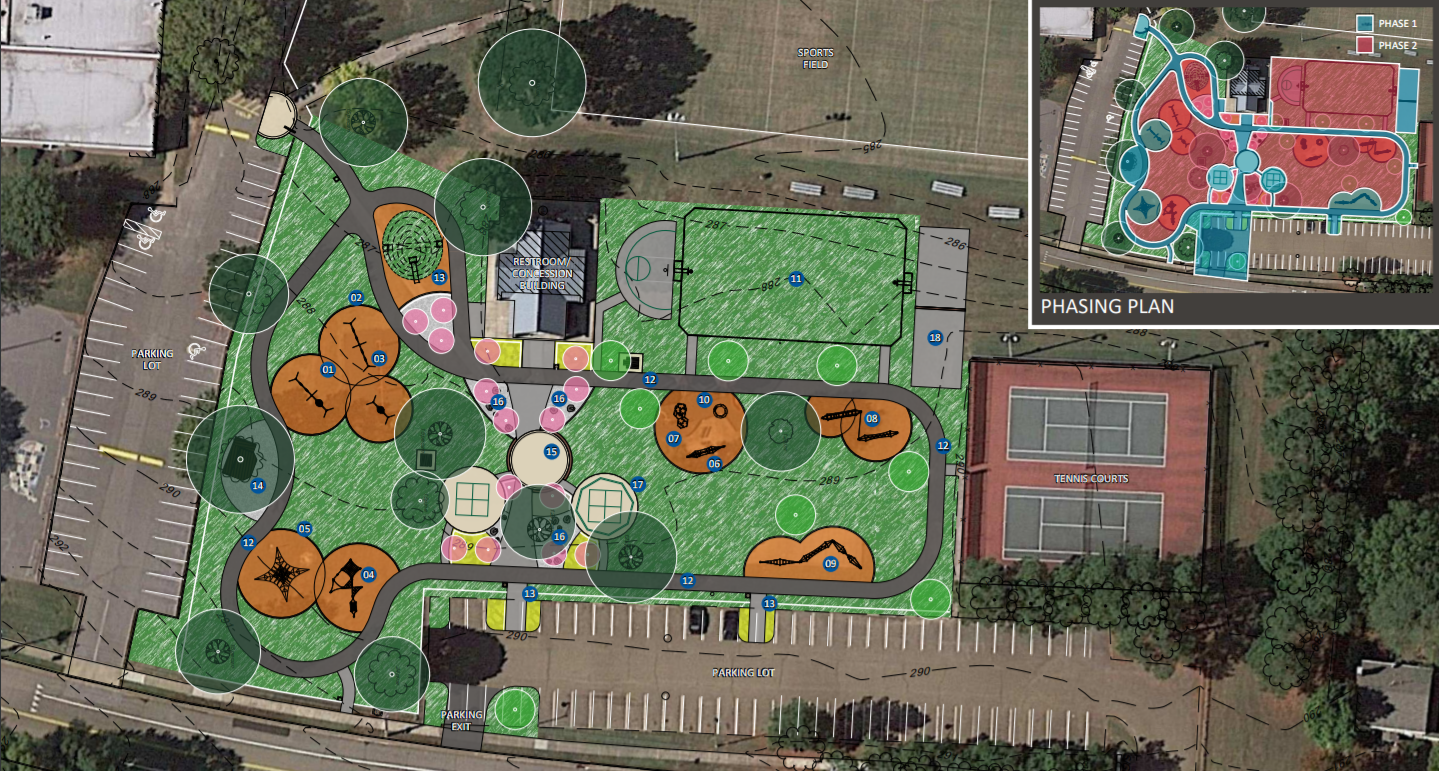
On March 8, 2018 the City, along with a team led by Dalhoff-Thomas Design Studio, held a public viewing of the Farmington Park Master Plan at the Elementary school from 3:30-6:00 pm. Since I’ve seen a lot of talk on Facebook and social media about this park, the basketball courts, and the sports fields, I decided to drop by and see the proposal. The staff had two large blown up proposed conceptual master plans on each side of the library as well as a PowerPoint presentation scrolling on the screen. Parks and Recreation Director Pam Beasley and the design staff were present to answer any questions from the public, but there was no formal scripted presentation to the group. It was more of a come and go, view at your leisure, and an opportunity to ask questions of anyone. There were also 3 by 5 cards for comments to drop in a box on one of the tables by the sign in sheet.

My attention was first drawn to the design plans. A gentleman from Dalhoff-Thomas described the design to me and a resident from the neighborhood. The construction will occur in two phases. Phase I would begin soon with money the City has already approved in this year’s budget. I don’t recall the exact figure, but Mrs. Beasley joined the conversation and stated it was a little over $300,000. The area shaded in blue was part of the first phase of construction. It appears to me to be mostly site work and just a handful of the design elements.  She explained to us that this part of the renovation also fits in with the larger 2018 Germantown Comprehensive Parks and Recreation Master Plan-- making the park ADA compliant is a priority. To do so requires removal of approximately ten parking spaces for access to the park and calls for an exit to be installed on the south end of the parking lot onto Cordes Road. She explained that the city would then request a grant from the State of Tennessee. If awarded those funds, Phase II could begin, using those funds along with matching funds from the city in the FY19 budget. Doing the quick math, and in response to my question, she confirmed that the total cost of this project will be in the neighborhood of $750,000.

I then moved to the projection screen and attempted to view the slides scrolling giving details of the project. This took a little time because of the amount of information on each slide. I couldn’t read it all before the slide rotated and had to wait for it to come around again. The fourth slide gave some good information - there are approximately 4000 residents in the square mile surrounding this park, there are 800+ students pre-K-Grade 5 at the school and approximately 200 after school care students that will be using this facility. The photos only depicted children playing in the park.  No adults were shown on the basketball court, yet almost every time I pass this park there are several adults playing ball here. 

The slide showing the proposed grant and city matching funds might be misleading unless you look closely and see that this $430,000 is only for Phase II, there is no mention of the cost for Phase I. Four of the slides gave bullet points on the positive impact this renovation will have on the community. These include how it fits with the Comprehensive Master Park Plan, how it fits with Germantown 2030 Plan, how it retains and advances recreational quality of life, and so forth.    


The four slides referencing the December 2017 survey of Farmington Elementary Families were a little confusing.  Of course I was not a participant in this survey so I didn’t know how the survey was worded. I did notice that ropes courses, slides and swings were rated high on the list of things in “the best parks you have visited” and “what would make this park totally awesome.” Then, although basketball was rated fairly low on the question of making this park totally awesome, it did appear as number three on the list of things the kids like to play. I didn’t quite understand that, as you would think it would appear on top the list of desired amenities.   

You may click to enlarge these slides:  


Shows Slides Second favorite activities


Shows one person wants to get rid of basketball

Basketball was third in what games played

Running Around, Climbing, and Sports are Favorites

I returned to the design plans and spoke to the design team and Mrs. Beasley and asked a few more questions. First, I pointed out the fact that their survey results mentioned that they liked slides (it was in the top three things listed). I asked why there were no slides and the designer pointed to the picture numbered 13 depicting a small hill with a slide.  The photo depicted a slide perhaps for a toddler but not one that an older student may have fun using. When I pointed this out, Mrs. Beasley recommended I fill out a comment card and drop it in the box. I then inquired about  why current basketball court was being removed. The designer said it was not safe because the ball frequently goes out into the parking lot, He then pointed out a half-court basketball area with a child sized goal, which I assume means it’s not regulation height. He stated that he was told that residents didn’t want the current court to remain. There are numerous ropes courses and a six regular swings and two basket-type swings incorporated in this plan, which were high on the list.  He also pointed out the features that teachers would use to hold outdoor classes-- sitting areas where teachers could observe the playground, and rock structures where kids may sit and talk or play with each other.

I didn’t see anything in this presentation that mentioned what the residents living near the school would like or what other residents that currently use the park would like to see.  Therefore I encourage all those who are interested in this project to go to the City Website and participate in the open survey. The information from the city indicates that the survey will close on March 18 at midnight, so you don’t have much time considering spring break is upon us and many may be traveling. Please take the time if this is one of your "go to" parks. I’m looking forward to viewing those comments and seeing how they may be incorporated into the final plan. I hope the city will post those results. 

I am also looking forward to seeing this 2018 Germantown Comprehensive Parks and Recreation Master Plan that is mentioned. I hope the city will make that available soon on their webpage, hopefully before final adoption by the Board of Mayor and Aldermen.  So far I’ve only seen the preliminary plan and participated in the public survey.  I am anxious to see the results of that survey and any changes that were incorporated in response to residents input.   

Again  PLEASE CLICK HERE TO TAKE THE SURVEY!